
Plant Encyclopedia Careers

Our Garden

Welcome to the Oman Botanic Garden

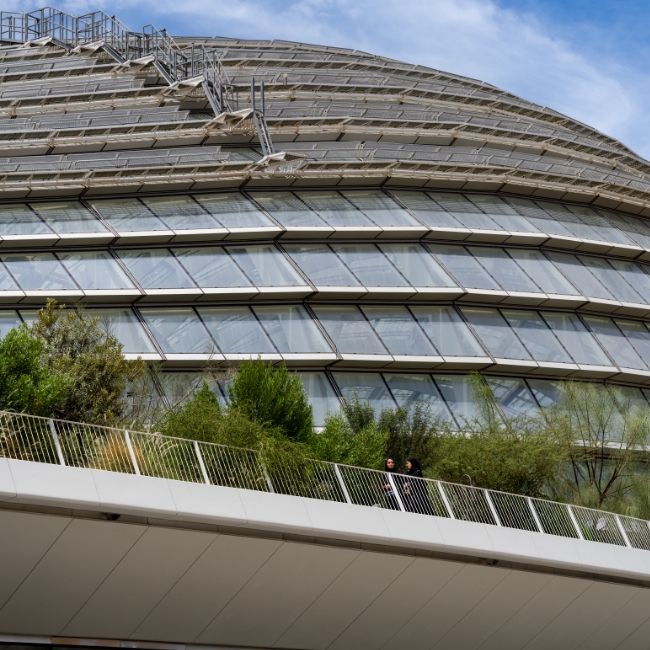
At the foot of the majestic Al Hajar Mountains, the Oman Botanic Garden welcomes you into a landscape where the plants, environments, and natural stories of Oman come vividly to life.

Spread across more than xxx hectares of protected land, the garden stands as one of the largest botanic gardens in the world and the largest in the Arabian Peninsula. Yet its true richness lies not in its size, but in the living landscapes it invites you to explore — landscapes shaped by time, climate, and the remarkable resilience of Oman’s native plants.

As you move through the garden, the diverse environments of Oman unfold around you. Paths wind through wadis, desert plains, and mountain slopes, allowing you to experience the plants exactly as they grow in nature. Each habitat tells a story about how life adapts, survives, and flourishes across the country’s varied terrain.

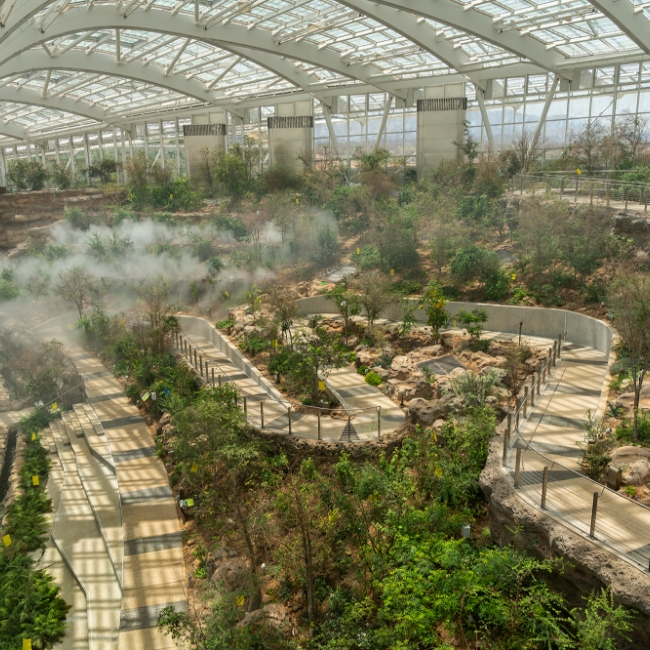
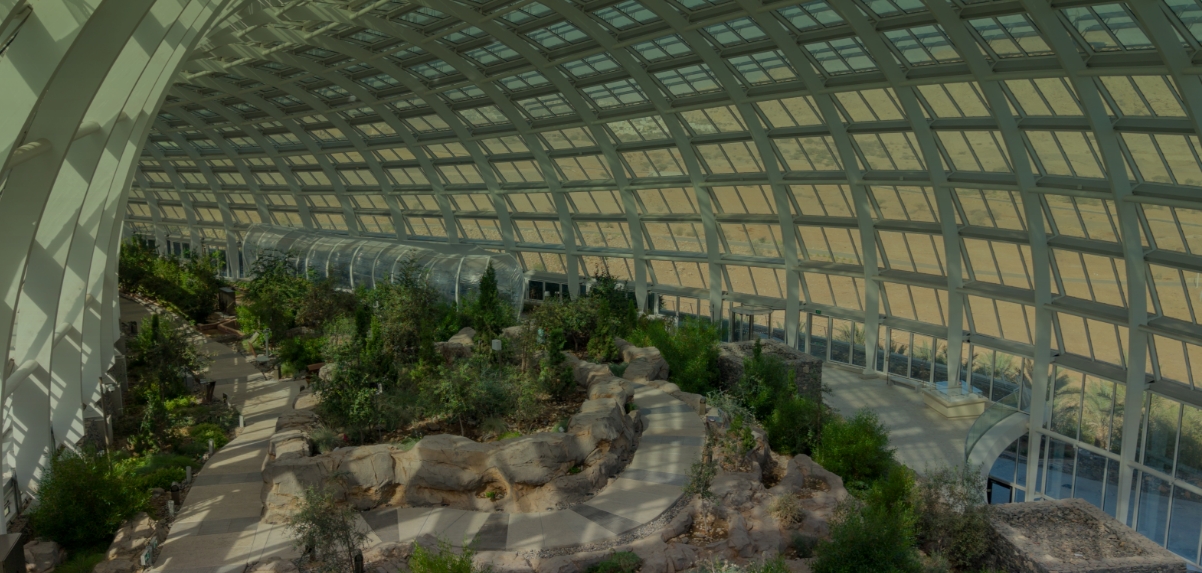
At the heart of the garden stand two remarkable biomes. Within these vast, carefully controlled environments, some of Oman’s most delicate ecosystems are recreated — from the cooler northern mountain climates to the mist-touched landscapes of the south. Here, you can step into environments rarely seen together in one place, surrounded by plants found nowhere else in the world.

More than anything, the garden invites you to slow down, notice the small wonders of the natural world, and see the landscapes of Oman with fresh eyes.

Because every plant here tells a story. And together, they tell your story too — a story of a land, its people, and the life that continues to grow within it.

8,400
sqm
298
plant species
Hajar
Mountains
Biome
Oman Botanic Garden
Dhofar
Mountains
Biome
Oman Botanic Garden

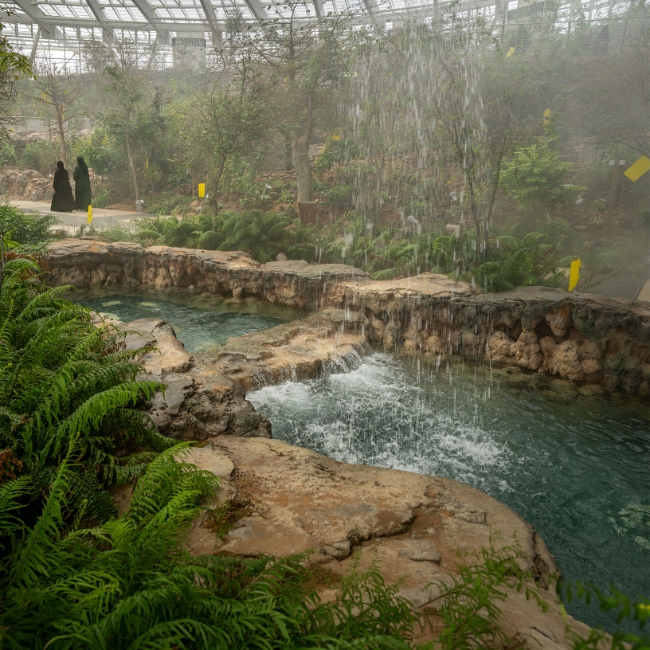
Step inside the Dhofar Mountains Biome and you find yourself transported to a landscape unlike any other in Oman — the lush, mist-covered mountains of the south. Inspired by the unique environment of the Dhofar Mountains, this biome recreates the extraordinary conditions shaped by the annual khareef monsoon, when clouds roll in from the Arabian Sea and transform the land into a green sanctuary.

Here, the air feels softer and more humid, carrying the sense of cool mountain fog that nourishes these landscapes each year. Water drifts gently through the environment, settling into rocky slopes and shaded valleys where plants thrive in conditions rarely found elsewhere on the Arabian Peninsula.

As you walk through this biome, the terrain unfolds like a southern mountain valley. Frankincense trees twist and stretch toward filtered light, their presence echoing centuries of trade and tradition across the region. Ferns, grasses, and flowering plants flourish in the cool shade, while ancient trees anchor the landscape, creating a layered forest that feels alive with quiet movement and scent.

Every plant here tells the story of adaptation to a rare climate — one where seasonal clouds, moisture-laden winds, and cooler temperatures allow a rich ecosystem to flourish. Many of these species are found only in this corner of Oman, making the Dhofar Mountains one of the most distinctive botanical regions in the Middle East.

But this biome is more than a recreation of a landscape. It is an invitation to experience the magic of the southern mountains — the feeling of walking through mist after rain, the scent of earth and resin in the air, and the deep connection between the land and the culture it has nurtured for generations.

Within these walls, the spirit of Dhofar’s green mountains lives and breathes, offering a rare glimpse into one of Oman’s most beautiful and unexpected natural worlds.

20,400
sqm
900
plant species

Desert

Across the deserts of Oman lies a landscape shaped by extremes — heat, wind, stone, and time. At first glance these environments may appear stark and empty, yet they hold a quiet complexity. Life here survives through patience and remarkable adaptation, with plants evolving ingenious ways to endure intense sun, scarce water, and shifting ground.

The desert landscapes within the garden bring together three distinct environments found across Oman: the Central Desert, the Northern Gravel Desert, and the Sand Deserts. Each reveals a different expression of life in the country’s most challenging terrains.

Central
Desert
Oman Botanic Garden

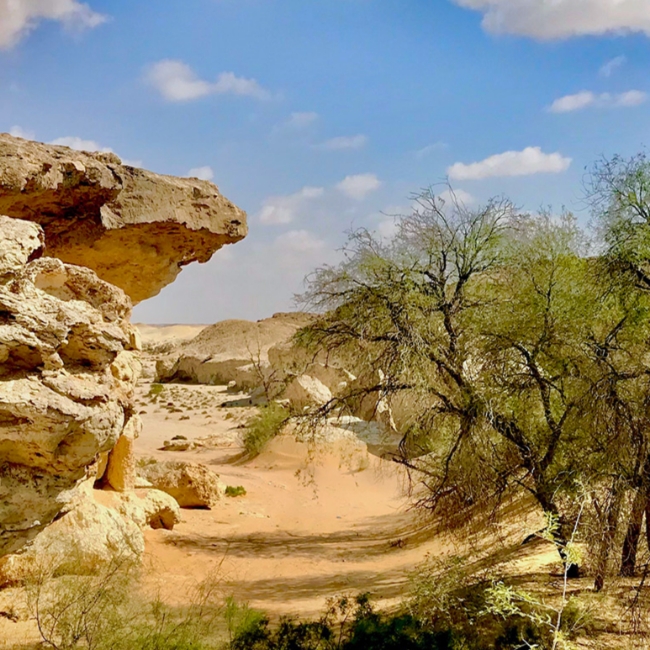
The Central Desert stretches across the heart of Oman, forming a vast natural divide between north and south. Broad plains, escarpments, and rocky plateaux define this landscape, punctuated by winding wadis that briefly come alive with water after rare rains. Vegetation is sparse, appearing in sheltered depressions where hardy trees and shrubs take root. Despite its austere beauty, this region is home to several plant species found nowhere else on Earth.

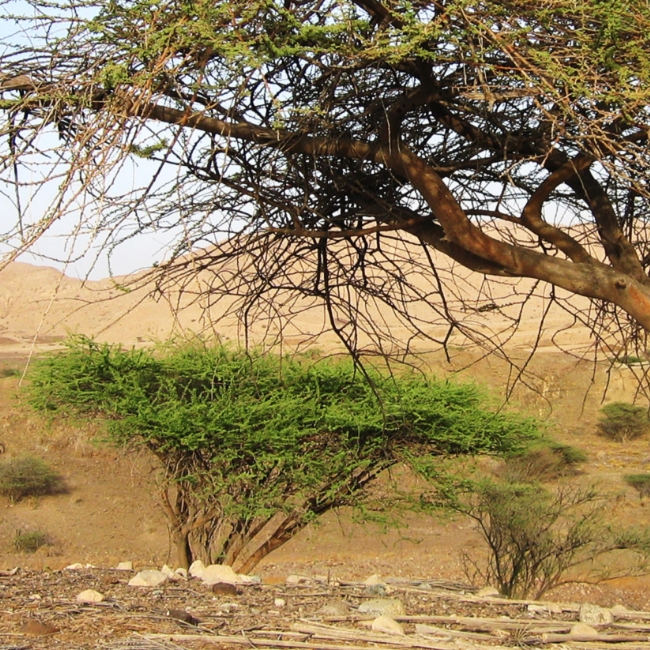
Further north, the Northern Gravel Desert spreads across low-lying plains shaped by ancient river systems. These gently undulating alluvial landscapes are scattered with stones and intersected by dry wadis. Though subtle in appearance, they support a surprising variety of desert-adapted plants — shrubs and trees that anchor themselves in stony soils and flourish with very little moisture.

Northern
Gravel Desert
Oman Botanic Garden
Sand Desert
Oman Botanic Garden

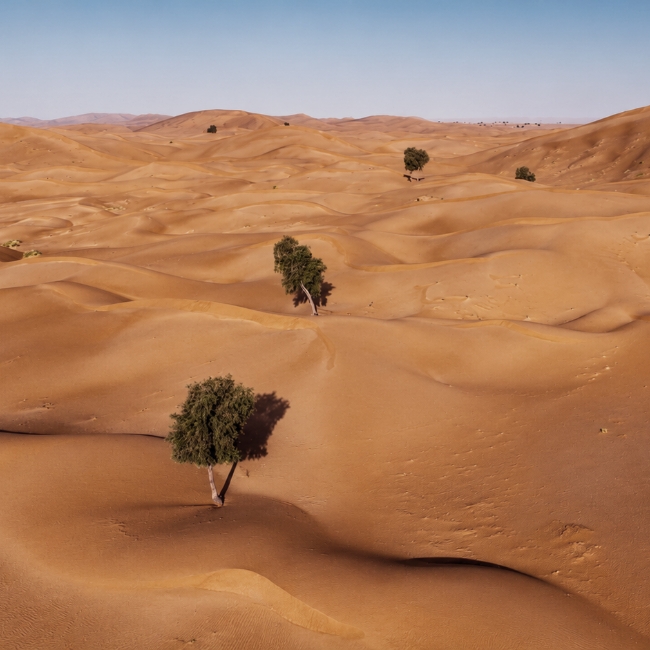
The Sand Deserts present a dramatically different environment. Inspired by the sweeping dunes of the Rub' al Khali and the vast Sharqiya Sands, this landscape is defined by wind-shaped formations: long linear ridges, crescent dunes, and towering star-shaped sands. Only a small number of highly specialised plants can survive here, sending roots deep below the shifting surface in search of hidden water.

Together, these desert habitats reveal the subtle richness of Oman’s arid landscapes — places where life persists against the odds and where every plant reflects centuries of adaptation to one of the world’s most demanding environments.

Sabkhas are salt flats where brackish water has come to the surface and has evaporated, typically leaving a smooth surface with high concentrations of salt in the existing substrate of clay, silt and/or sand.


This environment is generally inhospitable to plants, only a small number of species (halophytes) have adapted to these conditions. The bacterial communities living in the sabkha produce a pink to brown to green colour on the surface, giving this landscape an otherworldly appearance.

Sabka
Oman Botanic Garden
Wadi
Oman Botanic Garden

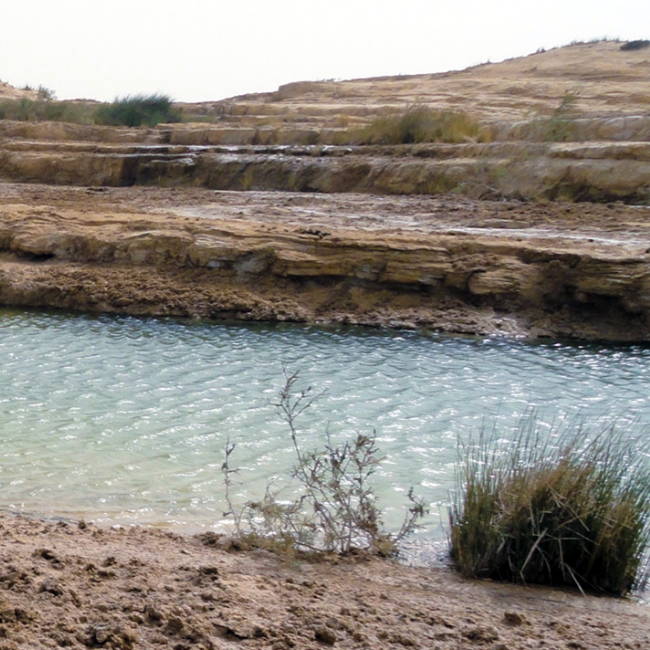
Wadis are the lifelines of the landscapes of Oman. Carved over centuries by seasonal rains flowing down from the mountains, these valleys shape the land and quietly sustain life in places where water is otherwise scarce.

Some wadis remain dry for much of the year, their broad beds revealing smooth stones, gravel, and winding channels that come alive only after heavy rains. During these rare moments, water rushes through the valleys, nourishing the soil and allowing hardy plants to take root along the edges.

Others hold water for longer periods, forming pools that gather in shaded hollows between rocky walls. In these wetter wadis, a richer tapestry of plant life emerges. Reeds and grasses line the water’s edge, delicate ferns thrive in cool crevices, and flowering shrubs flourish where moisture lingers.

Together, these habitats create natural corridors of life through Oman’s rugged terrain — places where plants, water, and wildlife meet. The wadis reveal how even the briefest presence of water can transform a landscape, allowing unexpected pockets of greenery to flourish amid stone and sun.

Agricultural Terraces

Along the mountain slopes of Oman, where the land rises steeply and water is scarce, generations of farmers have shaped the terrain with care and ingenuity. The agricultural terraces stand as a quiet testament to this relationship between people, land, and survival.

Carved into hillsides stone by stone, these terraces transform rugged mountains into fertile steps. They slow the flow of water, prevent soil erosion, and create pockets where crops can grow in otherwise unforgiving conditions. Here, agriculture is not imposed on the land — it works in harmony with it.

Within these terraces, you find a diversity of cultivated plants that have sustained communities for centuries. Fruit trees, grains, and herbs grow side by side, nourished by traditional irrigation systems that guide precious water across each level. Every terrace reflects deep knowledge passed down through generations — an understanding of seasons, soil, and balance.

More than a method of farming, the terraces are a cultural landscape. They tell the story of resilience, patience, and respect for nature — of people who learned to live with the mountains rather than against them.

In the garden, this habitat brings that story to life, offering a glimpse into a way of living where cultivation and conservation go hand in hand, and where every harvest is rooted in tradition.

5,000
years of history
100%
precise soil engineering

The Date Palm Grove invites you into the heart of Oman’s oasis life — a place where shade, water, and cultivation come together to create abundance in the midst of an arid land.

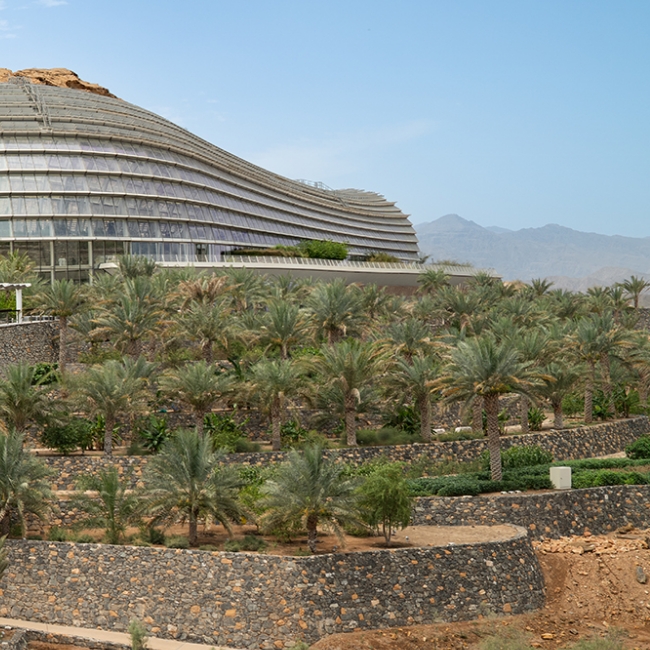
Across generations in Oman, date palms have stood at the centre of agriculture and daily life. In this grove, their tall canopies stretch overhead, filtering the sunlight and creating a cool, sheltered world beneath. This natural layering is no accident — it reflects a time-honoured system where every level of the land is used with care.

Beneath the palms, a rich variety of crops grows in harmony. Fruit trees, grains, and seasonal plants share the same space, nourished by the steady flow of water through the ancient falaj irrigation system. Here, lemons, pomegranates, apricots, and grains like wheat and barley thrive under the protective shade, forming a living example of sustainable cultivation.

The grove reveals how deeply connected people are to the land — how knowledge of water, soil, and seasons has shaped a way of life that endures even in challenging conditions. Every tree, every channel of water, and every crop reflects a careful balance between nature and human need.

More than a cultivated space, the Date Palm Grove is a place of continuity — where tradition lives on, and where the simple act of growing food becomes a story of resilience, ingenuity, and care.

Date Palm
Grove
Oman Botanic Garden